
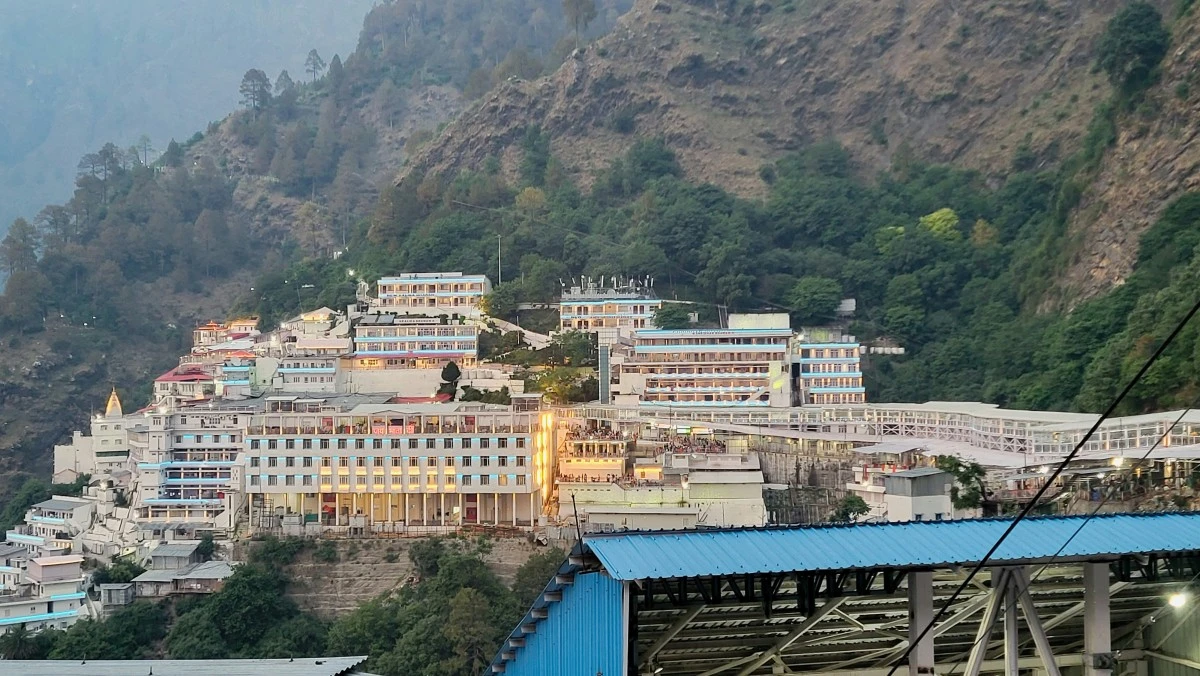
Introduction
Mata Vaishno Devi is one of the most visited pilgrimage destinations in India. Located in the Trikuta Hills of Jammu and Kashmir, this sacred shrine is visited by over 8 to 10 million devotees every year, making it one of the busiest religious sites in the country. The holy cave of Mata Vaishno Devi is situated at an altitude of around 5,200 feet above sea level, and pilgrims have to travel approximately 13 kilometers from Katra to reach the Bhawan.
According to Hindu beliefs, Mata Vaishno Devi is a combined form of Maha Kali, Maha Lakshmi, and Maha Saraswati. It is believed that Mata stayed and meditated inside the cave for many years while protecting dharma. The Vaishno Devi Yatra has been officially managed by the Shri Mata Vaishno Devi Shrine Board since 1986, which has helped improve facilities, safety, and crowd management for pilgrims.
Because of its mountainous location, the weather near the shrine is usually cooler than Jammu and nearby plains. The entire route from Katra to Bhawan is well developed with paved paths, lighting, medical facilities, and security arrangements, making it safe and accessible for pilgrims of all age groups
Today, the Mata Vaishno Devi Yatra is not only a religious journey but also a well-organized spiritual experience that blends faith, discipline, and natural beauty.
Best Time to Visit Mata Vaishno Devi
Mata Vaishno Devi temple is open throughout the year, and devotees can visit in any season. However, the best time to visit depends on weather conditions, crowd levels, and personal comfort. Each season offers a different experience for pilgrims.
Spring & Summer (March to June)
This is considered one of the best times for first-time visitors. The weather remains pleasant, with daytime temperatures ranging between 15°C to 30°C, which makes the 13 km trek comfortable. Facilities such as battery cars and helicopter services operate smoothly during this period. However, due to school holidays and weekends, the crowd can be moderate to high.
Monsoon (July to September)
During the monsoon season, the region receives moderate rainfall. The surrounding hills look green and fresh, creating a scenic experience. However, rain can make the trekking path slippery at times. Pilgrims are advised to wear good walking shoes and rain protection. Crowd levels are generally moderate, except during festival days.
Navratri Season (March–April & September–October)
Navratri is the most auspicious time to visit Mata Vaishno Devi. Lakhs of devotees visit during these days, and special arrangements are made by the Shrine Board. However, heavy crowds, long waiting hours, and limited accommodation are common. Advance registration and hotel booking are strongly recommended.
Winter (December to February)
Winter months are cold, with temperatures sometimes dropping below 5°C, and occasional snowfall may occur. Crowd levels are lower, making darshan peaceful. However, pilgrims must carry heavy woollen clothes and be prepared for weather-related delays.
Travel Tip:
For a balanced experience with manageable crowds and comfortable weather, March–April and September–October (excluding peak Navratri days) are ideal.
How to Reach Mata Vaishno Devi (By Air, Train & Road)
Reaching Mata Vaishno Devi is now much easier due to good connectivity by air, rail, and road. The journey officially begins from Katra, which is the base camp for the yatra.
By Air
The nearest airport is Jammu Airport (Satwari Airport), located about 50 km from Katra.
- Jammu Airport is well connected with major cities like Delhi, Mumbai, Bengaluru, Chennai, and Kolkata
- From the airport, you can hire a taxi or take a bus to reach Katra
- Travel time from Jammu Airport to Katra is around 1.5 to 2 hours, depending on traffic
This is the fastest option for pilgrims coming from faraway cities.
By Train
The most convenient railway station is Shri Mata Vaishno Devi Katra Railway Station.
- It is directly connected to major cities like New Delhi, Mumbai, Ahmedabad, Kolkata, Varanasi, and Chennai
- Many long-distance trains terminate at Katra, making travel comfortable for pilgrims
- The station is only 2–3 km from the main market and hotels in Katra.
Booking train tickets well in advance is strongly advised, especially during Navratri and peak seasons.
By Road
Katra is well connected by road to Jammu and other nearby cities through National Highway 44 (NH-44).
Distances by Road:
- Jammu to Katra – approx. 50 km (1.5–2 hours)
- Udhampur to Katra – approx. 25 km
- Delhi to Katra – approx. 650 km
Government buses, private buses, shared taxis, and private cabs are easily available from Jammu to Katra.
Important Tunnel Information (New & Time-Saving)
The journey by road has become much smoother and safer due to the Dr. Syama Prasad Mookerjee Tunnel, which is also known as the Chenani–Nashri Tunnel.
- Tunnel length: 9.28 km
- It is India’s longest road tunnel
- This tunnel reduces travel time between Jammu and Srinagar by avoiding difficult mountain passes
- It provides all-weather connectivity, especially helpful during rains and winter
Pilgrims traveling by road from Jammu to Katra benefit from better roads, less travel time, and safer driving conditions because of this tunnel.
Yatra Registration Process (Mandatory for All Pilgrims)
Before starting the Mata Vaishno Devi Yatra, registration is compulsory for every pilgrim, regardless of age. Without a valid Yatra Slip, no one is allowed to proceed beyond the entry checkpoints.
How to Register for Vaishno Devi Yatra
✅ Online Registration (Recommended)
Pilgrims can register online through the official website of Shri Mata Vaishno Devi Shrine Board:
👉 Official Website:
https://www.maavaishnodevi.org
Steps for Online Registration:
- Visit the official website
- Select “Yatra Registration”
- Enter personal details (name, age, ID proof)
- Choose the date of yatra
- Download or print the Yatra Slip
Online registration is highly recommended during Navratri, weekends, and peak seasons, as daily yatra limits are applied.
✅ Offline Registration
Offline registration counters are available in Katra, near Katra Bus Stand, Railway Station and Saraswati Dham. Registration through both the modes is free of cost.
Important Points to Remember
- Carry valid government ID proof.
- Yatra Slip is checked at Banganga checkpost.
- Yatra Slip is valid for the registered date only.
Trekking Routes from Katra to Bhawan (Old Route vs New Route)
The total trekking distance from Katra to Bhawan is approximately 13 kilometers. Pilgrims can choose between two main routes, both well maintained and safe.
Route 1: Old Route (Traditional Route via Banganga)
Distance: Approx. 13 km
Key Points on This Route:
- Banganga
- Charan Paduka
- Ardhkuwari
- Sanjichhat
- Bhawan
Features:
- This is the original and most spiritual route
- Steeper climb in some sections
- Passes through important religious landmarks
- Preferred by devotees who want a traditional yatra experience
Route 2: New Route (Himkoti / Tarakote Marg)
Distance: Approx. 14–15 km (slightly longer but smoother)
About the Route:
- Developed by the Shrine Board to reduce congestion
- Wider, cleaner, and less steep
- Better suited for senior citizens and families
Features:
- Smooth gradient
- Scenic views and resting areas
- Less crowded compared to old route
- Battery car services available on some stretches
Which Route Should You Choose?
- First-time or spiritual-focused pilgrims: Old Route
- Senior citizens / children / relaxed walk: New Route
- Peak season travel: New Route (less crowd)
Many pilgrims go up via one route and return via the other, making the yatra more comfortable.
Facilities Available on Both Routes
- Drinking water points
- Toilets
- Food stalls & langars
- Medical aid centers
- Security & CCTV monitoring
All services are managed by the Shri Mata Vaishno Devi Shrine Board.
Helicopter Service for Mata Vaishno Devi (Route, Booking & Tips)
For pilgrims who have limited time or face difficulty in trekking, helicopter service is one of the fastest and most comfortable ways to reach Mata Vaishno Devi. This service is officially operated under the supervision of the Shri Mata Vaishno Devi Shrine Board.
Helicopter Route & Distance
- Route: Katra → Sanjichhat → Katra
- Flight Time: Around 8 minutes one way
- Distance from Sanjichhat to Bhawan: Approx. 2.5 km (walkable)
From Sanjichhat, pilgrims need to walk or take a palki/pony to reach the Bhawan.
Official Helicopter Booking Website (Very Important)
👉 Only official booking website:
https://www.maavaishnodevi.org
From passenger details to online payment and e-ticket downloading, all can be done from this official website.
Important:
The Shrine Board strongly advises pilgrims not to book helicopters from agents or unofficial websites, as scams are common during peak seasons.
Helicopter Charges (Approximate)
- One-way: ₹2,100 – ₹2,500 per person
- Round trip: ₹4,200 – ₹5,000 per person
(Prices may change, so always check the official website)
Important Tips for Helicopter Pilgrims
- Book tickets well in advance, especially during Navratri
- Reach helipad at least 1 hour before departure
- Carry printed ticket + original ID proof
- In case of cancellation due to weather, refund is usually processed as per Shrine Board rules
Darshan Process at Mata Vaishno Devi Bhawan
Darshan at Mata Vaishno Devi Bhawan is a well-organized and strictly managed process handled by the Shri Mata Vaishno Devi Shrine Board. Due to the large number of pilgrims visiting every day, darshan follows a queue-based system to ensure safety and discipline.
Entry into Bhawan Area
After completing the trek, pilgrims enter the Bhawan area after security checks. Access is allowed only to those with a valid Yatra Slip.
- Yatra Slip is checked at multiple points
- Security screening is mandatory
- Separate queues are maintained for different categories of pilgrims
Types of Darshan Queues
1. Free Darshan (General Queue)
This is the most common option used by pilgrims.
- No extra charge
- Waiting time depends on crowd levels
- During normal days: 3–6 hours
- During peak days (Navratri, weekends): 8–12 hours or more
2. Priority Darshan
Priority darshan is available for pilgrims who want faster access.
- Limited slots available per day
- Usually booked through official channels
- Significantly reduces waiting time
(Availability and charges vary, so always check the official website)
Darshan Inside the Holy Cave
The main darshan happens inside the holy cave, where there are three natural rock formations (Pindis) representing:
- Maha Kali – symbol of strength
- Maha Lakshmi – symbol of prosperity
- Maha Saraswati – symbol of wisdom
Pilgrims pass through the cave in a moving line. The darshan is brief but deeply spiritual.
Important Rules Inside the Cave
- Photography, mobile phones, and electronic items are strictly prohibited
- Cloakrooms are available to deposit belongings
- Follow instructions of Shrine Board staff
- Maintain silence and discipline
Breaking rules can result in removal from the queue.
Time Required for Complete Darshan
From entry to exit, the entire darshan process may take:
- 1–2 hours (low crowd)
- Several hours (high crowd days)
Patience is key during darshan, especially during festival periods.
Darshan Tips for Pilgrims
- Start trek early in the morning or late evening.
- Avoid carrying unnecessary items.
- Stay hydrated and calm.
- Senior citizens should opt for priority facilities if available.
Bhairav Temple – Why It Is an Important Part of the Yatra
The visit to Bhairav Temple is considered an essential part of the Mata Vaishno Devi Yatra. According to belief, the yatra is incomplete without darshan at Bhairav Temple. Bhairavnath was the one who followed Mata Vaishno Devi to the Trikuta Hills. After Mata defeated him, she forgave him and granted him salvation. Mata also declared that devotees must visit Bhairav Temple after her darshan to complete the pilgrimage.
The Bhairav Temple is located around 2 kilometres uphill from the Bhawan and sits at a higher altitude. The route is steep but well developed. Pilgrims can reach the temple by walking, hiring a pony or palki, or using the ropeway service (costs Rs.100/- for a round trip & usually operates from 9 AM to 05 PM), which has made the journey easier, especially for senior citizens and tired pilgrims. The ropeway ride is short and offers beautiful views of the surrounding mountains.
Accommodation Options in Katra and Near Bhawan
Katra offers a wide range of accommodation options to suit every budget, as it is the main base camp for the Mata Vaishno Devi Yatra. Pilgrims can find budget guest houses, mid-range hotels, and premium hotels easily within walking distance of the railway station and main market. Most hotels in Katra provide basic facilities like hot water, clean rooms, and early check-in support during yatra season.
Apart from private hotels, the Shri Mata Vaishno Devi Shrine Board also operates its own guest houses and accommodation facilities in Katra, Adhkuwari, Sanjichhat, and Bhawan. These accommodations are known for being clean, safe, and reasonably priced. Booking for Shrine Board accommodation can be done only through the official website:
https://www.maavaishnodevi.org
Staying near Bhawan or Adhkuwari is especially helpful for pilgrims who want to rest before or after darshan, or those traveling with elderly family members. Since rooms at these locations are limited, they get booked very quickly.
Food, Langar, and Basic Facilities
Food facilities during the Mata Vaishno Devi Yatra are well managed by the Shrine Board. Free langar (meals) is available at multiple locations including Katra, Banganga, Adhkuwari, Sanjichhat, and near Bhawan. In which the most common serves are Rajma Chawal and Kadhi Chawal etc. The food served is simple, pure vegetarian, and hygienic, suitable for pilgrims of all age groups. In Katra, there are many restaurants and dhabas offering vegetarian meals, snacks, and packed food for the journey.
Safety and Health Advice for Pilgrims
The Mata Vaishno Devi Yatra is generally safe, as the entire route is monitored by security personnel and CCTV cameras. However, pilgrims should walk at a comfortable pace, take regular breaks, and avoid rushing. Staying hydrated is very important, especially during summer months. Elderly pilgrims and those with health conditions should consult a doctor before planning the yatra and use facilities like battery cars, palki, or helicopter services if needed.
Pilgrims should always use authorized services only and avoid shortcuts or unapproved paths. In case of any medical emergency or assistance, Shrine Board help desks and medical units are available throughout the route and near Bhawan.
Final Tips and Conclusion
The Mata Vaishno Devi Yatra is a journey of faith, patience, and devotion. With proper planning, early bookings, and awareness of facilities, the yatra can be smooth and spiritually fulfilling. Pilgrims are advised to carry valid ID proof, wear comfortable footwear, pack light, and follow all instructions issued by the Shrine Board.
Whether you walk the entire 13 km route or choose modern facilities like helicopter or ropeway services, the blessings of Mata Vaishno Devi remain the same for everyone. A calm mind, respect for the surroundings, and devotion in the heart will make this sacred journey truly memorable.
Frequently Asked Questions (FAQs)
Yes, yatra registration is compulsory for all pilgrims. Without a valid Yatra Slip, entry beyond Banganga is not allowed.
The trekking distance from Katra to Mata Vaishno Devi Bhawan is approximately 13 km via the old route and around 14–15 km via the new route.
March to June and September to October (excluding peak Navratri days) are considered the best times due to pleasant weather and manageable crowds.
Yes, helicopter service operates between Katra and Sanjichhat. Tickets can be booked only through the official Shrine Board website.
Yes, the yatra is considered incomplete without darshan at Bhairav Temple, which is located around 2 km from Bhawan.
Yes, the Shrine Board provides accommodation at Bhawan, Adhkuwari, and Sanjichhat, but rooms are limited and should be booked in advance.